
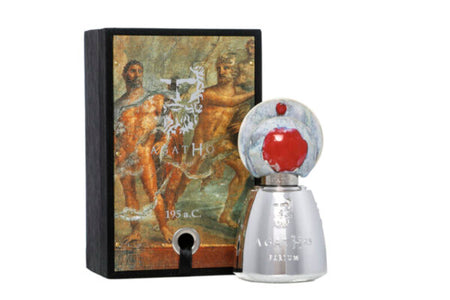

Rest in the blissful shade of an orchard in the humming city of Pompeii: the year is 195 BC. Inhale the sweet aroma of ripe figs and the local pomegranate leaves heated by the sun; these entine spicy incense being smoked in the nearby temple. So anciently refreshing!
All about this fragrance
Vibe check
The mood is an unhurried conversation in the shade of a fruit tree, with sun-warmed leaves overhead and a trace of smoke in the air. Mint and green fruit keep the opening alert; fig and incense give the presence a warmer, more intimate weight as the afternoon slows.
How to wear
Try it in mild spring weather or on a warm afternoon moving into evening, when its leafy freshness and smoky woods can both register. Start with one or two sprays on skin: its bold character calls for restraint in close quarters. In hotter conditions, keep the application lighter so the ripe fruit does not overwhelm the mint.
Who it’s for
For lovers of fig fragrances who want more than soft fruit or leafy freshness. The mint and pomegranate offer a green edge, while cardamom, cedarwood and incense suit tastes drawn to assertive, sensual compositions with a smoky woody counterweight.
Release year
2019
The nose
Maurizio Cerizza is an Italian perfumer whose work spans niche fragrances and broader commercial perfumery. His familiarity with botanical materials informs a style attentive to natural textures and the balance between freshness and depth. In 195 a.C., that contrast takes shape through leafy fruit, aromatic spice and incense-darkened woods.
Agatho’s story
Agatho translates the imagined fragrance heritage of ancient Pompeii into contemporary Italian perfumery. Its identity combines expressive raw materials with artisanal presentation, particularly handcrafted porcelain caps made using Capodimonte techniques. Historical storytelling is a creative starting point, rather than a claim to reproduce ancient formulas.
195 A.C.’s concept
195 a.C. takes its name from 195 BC, when the Lex Oppia, which restricted women’s displays of wealth and luxury, was repealed. Agatho interprets that moment as a celebration of regained freedom and sensual pleasure, placing fig at the centre of an imagined Pompeian orchard threaded with temple incense.
Extra info
The date in the name refers to the fragrance’s ancient historical inspiration, not its modern release. It belongs to Agatho’s Pompei Collection, and the house’s official presentation pairs a fine porcelain cap with a silk-lined wooden box.
Will it suit you?
Couldn’t load your stylist’s take.
Set up your scent profile and your stylist will tell you honestly whether 195 A.C. is you.
How your fit is worked out
- 1
Reads your profile
What you told us, the voice you picked, and the fragrances you’ve bought and rated.
- 2
Compares it with this fragrance
Notes, structure and strength, and how similar fragrances landed with you.
- 3
Writes a verdict in your character’s voice
A fit from “Strong fit” to “Not for you”, with the reasons, at your reading length.
The fit scale
Your stylist is an AI, so treat the verdict as an informed opinion, not a promise. The surest test is still skin: most fragrances come as a 1 ml sample.
Rest in the blissful shade of an orchard in the humming city of Pompeii: the year is 195 BC. Inhale the sweet aroma of ripe figs and the local pomegranate leaves heated by the sun; these entine spicy incense being smoked in the nearby temple. So anciently refreshing!
All about this fragrance
Vibe check
The mood is an unhurried conversation in the shade of a fruit tree, with sun-warmed leaves overhead and a trace of smoke in the air. Mint and green fruit keep the opening alert; fig and incense give the presence a warmer, more intimate weight as the afternoon slows.
How to wear
Try it in mild spring weather or on a warm afternoon moving into evening, when its leafy freshness and smoky woods can both register. Start with one or two sprays on skin: its bold character calls for restraint in close quarters. In hotter conditions, keep the application lighter so the ripe fruit does not overwhelm the mint.
Who it’s for
For lovers of fig fragrances who want more than soft fruit or leafy freshness. The mint and pomegranate offer a green edge, while cardamom, cedarwood and incense suit tastes drawn to assertive, sensual compositions with a smoky woody counterweight.
Release year
2019
The nose
Maurizio Cerizza is an Italian perfumer whose work spans niche fragrances and broader commercial perfumery. His familiarity with botanical materials informs a style attentive to natural textures and the balance between freshness and depth. In 195 a.C., that contrast takes shape through leafy fruit, aromatic spice and incense-darkened woods.
Agatho’s story
Agatho translates the imagined fragrance heritage of ancient Pompeii into contemporary Italian perfumery. Its identity combines expressive raw materials with artisanal presentation, particularly handcrafted porcelain caps made using Capodimonte techniques. Historical storytelling is a creative starting point, rather than a claim to reproduce ancient formulas.
195 A.C.’s concept
195 a.C. takes its name from 195 BC, when the Lex Oppia, which restricted women’s displays of wealth and luxury, was repealed. Agatho interprets that moment as a celebration of regained freedom and sensual pleasure, placing fig at the centre of an imagined Pompeian orchard threaded with temple incense.
Extra info
The date in the name refers to the fragrance’s ancient historical inspiration, not its modern release. It belongs to Agatho’s Pompei Collection, and the house’s official presentation pairs a fine porcelain cap with a silk-lined wooden box.