Edible
Woody
Notesambemaxamberangelica rootbigaradegaiac / guaiac woodgaïac woodjuniperlemonoakorris (iris root)vanilla
Style
for her
for him
unisex
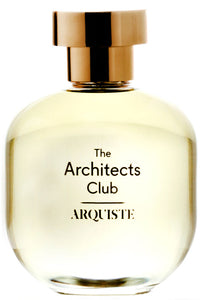
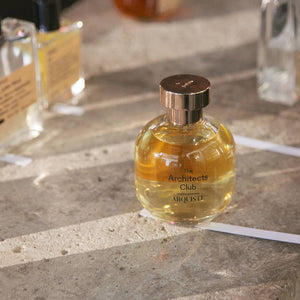
March 1930, London
A group of architects gather for cocktails at Mayfair's smartest Art Deco smoking room. As they settle in the warm interior of dark woods, leather and velvet, London's bright young things burst in, frosted martinis in hand, surrounded by a cloud of laughter - white smoke and fine vanilla.
All about this fragrance
Vibe check
It suits the moment when a formal gathering loosens into conversation: a cold drink in hand, dark wood nearby, and laughter interrupting the room’s reserve. The juniper brings a crisp edge, while smoky vanilla gives the wearer a warmer, more approachable presence.
How to wear
The vanilla-and-wood core makes this a natural choice for autumn, winter and cooler evenings. Start with one or two sprays on the upper chest or wrists to keep the warmth close, allowing the martini-like opening to contrast with it. In warmer weather, apply lightly so the sweetness does not dominate.
Who it’s for
For those who enjoy vanilla with structure rather than confectionery sweetness. Its bitter citrus, juniper and smoky woods will appeal to wearers drawn to cocktail-inspired scents, restrained gourmands and the contrast between crisp aromatics and soft, enveloping warmth.
Release year
2014
The nose
Yann Vasnier is known for detailed, contemporary compositions that balance expressive ingredients with carefully judged texture. His work spans niche perfumery and major luxury houses, including Tom Ford’s Santal Blush. For The Architects Club, he contrasts a cool, gin-like opening with polished vanilla and warm woods, increasing the natural vanilla during development to give the composition greater density.
Collaborators
Carlos Huber, Arquiste’s founder and fragrance designer, developed the historical concept with Yann Vasnier. Drawing on his architectural background, he shaped the contrast between a chilled martini and the warm materials of an Art Deco smoking room, guiding the vanilla toward a comforting, enveloping character rather than a syrupy one.
Arquiste’s story
Arquiste approaches perfume as a time capsule, translating researched places and historical moments into scent. Founded by architect and preservationist Carlos Huber, the house connects architectural materials, atmosphere and human stories through compositions that interpret the past rather than attempt a literal reconstruction.
The Architects Club’s concept
The starting point was Claridge’s late-1920s renovation and the contrast between its Victorian exterior and Art Deco interiors. Set in an imagined March 1930 cocktail hour, the fragrance brings architects in a wood-lined smoking room together with young guests carrying martinis. Juniper and citrus suggest the cold drinks; vanilla and woods evoke the room’s upholstered warmth and drifting smoke.
Extra info
March 1930 is the fragrance’s imagined setting, not its release date. Its official product page includes a research bibliography spanning architecture, social history and literature, with Virginia Woolf’s The London Scene, D. J. Taylor’s Bright Young People and Richard Barnett’s The Book of Gin among the references.
Notesambemaxamberangelica rootbigaradegaiac / guaiac woodgaïac woodjuniperlemonoakorris (iris root)vanilla
Style
for her
for him
unisex
March 1930, London
A group of architects gather for cocktails at Mayfair's smartest Art Deco smoking room. As they settle in the warm interior of dark woods, leather and velvet, London's bright young things burst in, frosted martinis in hand, surrounded by a cloud of laughter - white smoke and fine vanilla.
All about this fragrance
Vibe check
It suits the moment when a formal gathering loosens into conversation: a cold drink in hand, dark wood nearby, and laughter interrupting the room’s reserve. The juniper brings a crisp edge, while smoky vanilla gives the wearer a warmer, more approachable presence.
How to wear
The vanilla-and-wood core makes this a natural choice for autumn, winter and cooler evenings. Start with one or two sprays on the upper chest or wrists to keep the warmth close, allowing the martini-like opening to contrast with it. In warmer weather, apply lightly so the sweetness does not dominate.
Who it’s for
For those who enjoy vanilla with structure rather than confectionery sweetness. Its bitter citrus, juniper and smoky woods will appeal to wearers drawn to cocktail-inspired scents, restrained gourmands and the contrast between crisp aromatics and soft, enveloping warmth.
Release year
2014
The nose
Yann Vasnier is known for detailed, contemporary compositions that balance expressive ingredients with carefully judged texture. His work spans niche perfumery and major luxury houses, including Tom Ford’s Santal Blush. For The Architects Club, he contrasts a cool, gin-like opening with polished vanilla and warm woods, increasing the natural vanilla during development to give the composition greater density.
Collaborators
Carlos Huber, Arquiste’s founder and fragrance designer, developed the historical concept with Yann Vasnier. Drawing on his architectural background, he shaped the contrast between a chilled martini and the warm materials of an Art Deco smoking room, guiding the vanilla toward a comforting, enveloping character rather than a syrupy one.
Arquiste’s story
Arquiste approaches perfume as a time capsule, translating researched places and historical moments into scent. Founded by architect and preservationist Carlos Huber, the house connects architectural materials, atmosphere and human stories through compositions that interpret the past rather than attempt a literal reconstruction.
The Architects Club’s concept
The starting point was Claridge’s late-1920s renovation and the contrast between its Victorian exterior and Art Deco interiors. Set in an imagined March 1930 cocktail hour, the fragrance brings architects in a wood-lined smoking room together with young guests carrying martinis. Juniper and citrus suggest the cold drinks; vanilla and woods evoke the room’s upholstered warmth and drifting smoke.
Extra info
March 1930 is the fragrance’s imagined setting, not its release date. Its official product page includes a research bibliography spanning architecture, social history and literature, with Virginia Woolf’s The London Scene, D. J. Taylor’s Bright Young People and Richard Barnett’s The Book of Gin among the references.