Mansa Musa
by SweDoft
Leather
Woody
Top Notesbergamotsaffronvalerian
Heartambercashmerancypriolrosesandalwood
Base Notesindian oudmossmuskoudraspberry
Tags
#animalic
Style
unisex
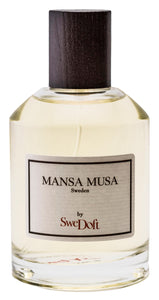
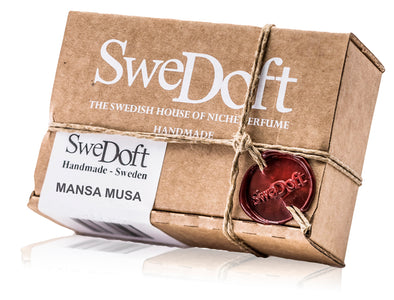
Named after the supposedly richest ruler who ever lived, the African king Mansa Musa, the perfume is made with rich Indian oud (with a fermented leathery nuance), sandalwood, spices and a drop of rose.
All about this fragrance
Vibe check
This is a fragrance for an unhurried evening when conversation draws closer rather than louder. Its fermented oud and leather-like texture give the wearer a substantial presence, while sandalwood and a trace of rose soften the edges without disguising the animalic character.
How to wear
Cool autumn and winter weather suits the woody, amber-rich composition. Start with one or two sprays on skin beneath clothing to keep the animalic oud measured and close; in warmer conditions, use a lighter application, as heat may make its fermented, leathery facets feel more pronounced.
Who it’s for
For wearers who enjoy textured oud, animalic woods and leather-like accords rather than polished woody freshness. The restrained rose will appeal to those who prefer florals as an accent, with sandalwood and amber providing a softer counterweight to the composition’s darker character.
Release year
2022 (or 2021)
The nose
Sfean J.A.
SweDoft’s story
SweDoft is a Swedish niche house focused on original formulas and fragrance as storytelling. Its current philosophy pairs experimentation with wearability and balance, emphasizing accessible pricing and Swedish production, bottling and packaging rather than exclusivity for its own sake.
Mansa Musa’s concept
Mansa Musa takes its name from the African ruler whose wealth inspired the fragrance’s opulent character. The house frames it as a tribute to a personality that reveals itself gradually, translating that idea into an oud-centered composition with leathery depth, sandalwood, spices and a restrained touch of rose.
Extra info
The official note list includes valerian and raspberry alongside oud, saffron, rose and moss—an unusual combination beyond the fragrance’s central woody-leathery character. These ingredients are presented as a single list rather than a conventional top, heart and base pyramid.
Featured in edits and sample packs
Sandalwood Silhouettes
PRE-ORDER
£70.00, 30 ml EdP
Top Notesbergamotsaffronvalerian
Heartambercashmerancypriolrosesandalwood
Base Notesindian oudmossmuskoudraspberry
Tags
#animalic
Style
unisex
Named after the supposedly richest ruler who ever lived, the African king Mansa Musa, the perfume is made with rich Indian oud (with a fermented leathery nuance), sandalwood, spices and a drop of rose.
All about this fragrance
Vibe check
This is a fragrance for an unhurried evening when conversation draws closer rather than louder. Its fermented oud and leather-like texture give the wearer a substantial presence, while sandalwood and a trace of rose soften the edges without disguising the animalic character.
How to wear
Cool autumn and winter weather suits the woody, amber-rich composition. Start with one or two sprays on skin beneath clothing to keep the animalic oud measured and close; in warmer conditions, use a lighter application, as heat may make its fermented, leathery facets feel more pronounced.
Who it’s for
For wearers who enjoy textured oud, animalic woods and leather-like accords rather than polished woody freshness. The restrained rose will appeal to those who prefer florals as an accent, with sandalwood and amber providing a softer counterweight to the composition’s darker character.
Release year
2022 (or 2021)
The nose
Sfean J.A.
SweDoft’s story
SweDoft is a Swedish niche house focused on original formulas and fragrance as storytelling. Its current philosophy pairs experimentation with wearability and balance, emphasizing accessible pricing and Swedish production, bottling and packaging rather than exclusivity for its own sake.
Mansa Musa’s concept
Mansa Musa takes its name from the African ruler whose wealth inspired the fragrance’s opulent character. The house frames it as a tribute to a personality that reveals itself gradually, translating that idea into an oud-centered composition with leathery depth, sandalwood, spices and a restrained touch of rose.
Extra info
The official note list includes valerian and raspberry alongside oud, saffron, rose and moss—an unusual combination beyond the fragrance’s central woody-leathery character. These ingredients are presented as a single list rather than a conventional top, heart and base pyramid.
Featured in edits and sample packs
Sandalwood Silhouettes