Floral
Fruity
Notescedarwoodgrapefruitjasminemandarinmangooakmosspassion fruitrosewood
Tags
#sexy
Style
for her
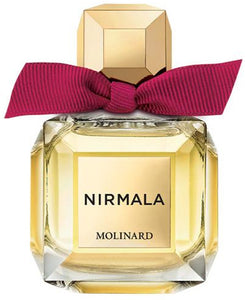

A carefree fruity progression of sweet citruses, honeyed jasmine and delicious mango.
Nirmala means “pure” in Hindi and the perfume is a bright generous formula akin in its vibes to the colorful Holi festival of colors. A celebration which involves people throwing colored powder on each other and squirting each other with water guns.
All about this fragrance
Vibe check
Nirmala suits a lively afternoon gathering where conversation comes easily and formality falls away. Mango and mandarin lend a generous, almost edible brightness, while honeyed jasmine brings a more intimate undertone as people draw closer.
How to wear
Try it in mild spring weather or on a cooler summer evening, when its tropical fruit and jasmine feel especially at home. Start with one or two sprays on skin; in heat or close quarters, a lighter application helps keep the sweetness measured.
Who it’s for
For lovers of juicy tropical fruit, sweet citrus and honeyed florals who prefer generosity to restraint. Its playful sensuality will appeal to those who enjoy a gourmand-leaning floral without wanting fruit to disappear behind austere woods or dry greenery.
Release year
1955, reworked 1993 & 2000
Molinard’s story
Founded in Grasse in 1849, Molinard is an independent, family-owned house that balances inherited perfumery craft with experimentation. Its approach embraces ingredients from both nature and science, treating fragrance as a source of beauty and well-being rather than an exclusively rarefied luxury.
Nirmala’s concept
Originally launched in 1955, Nirmala has subsequently been reworked and repackaged. Its current India-inspired narrative brings together exotic fruits, flowers and talisman imagery in a romantic ode to love. The goddess Nirmala belongs to the house’s promotional storytelling, rather than a verified account of the fragrance’s origins.
Extra info
Nirmala means “pure” in Hindi. Its Collection Icônes bottle design draws inspiration from a diamond-shaped bottle Baccarat created for Molinard in the 1910s; this does not mean that the standard modern bottle is Baccarat crystal. Nirmala is also distinct from Le Rêve Nirmala, a separate eau de toilette.
Notescedarwoodgrapefruitjasminemandarinmangooakmosspassion fruitrosewood
Tags
#sexy
Style
for her
A carefree fruity progression of sweet citruses, honeyed jasmine and delicious mango.
Nirmala means “pure” in Hindi and the perfume is a bright generous formula akin in its vibes to the colorful Holi festival of colors. A celebration which involves people throwing colored powder on each other and squirting each other with water guns.
All about this fragrance
Vibe check
Nirmala suits a lively afternoon gathering where conversation comes easily and formality falls away. Mango and mandarin lend a generous, almost edible brightness, while honeyed jasmine brings a more intimate undertone as people draw closer.
How to wear
Try it in mild spring weather or on a cooler summer evening, when its tropical fruit and jasmine feel especially at home. Start with one or two sprays on skin; in heat or close quarters, a lighter application helps keep the sweetness measured.
Who it’s for
For lovers of juicy tropical fruit, sweet citrus and honeyed florals who prefer generosity to restraint. Its playful sensuality will appeal to those who enjoy a gourmand-leaning floral without wanting fruit to disappear behind austere woods or dry greenery.
Release year
1955, reworked 1993 & 2000
Molinard’s story
Founded in Grasse in 1849, Molinard is an independent, family-owned house that balances inherited perfumery craft with experimentation. Its approach embraces ingredients from both nature and science, treating fragrance as a source of beauty and well-being rather than an exclusively rarefied luxury.
Nirmala’s concept
Originally launched in 1955, Nirmala has subsequently been reworked and repackaged. Its current India-inspired narrative brings together exotic fruits, flowers and talisman imagery in a romantic ode to love. The goddess Nirmala belongs to the house’s promotional storytelling, rather than a verified account of the fragrance’s origins.
Extra info
Nirmala means “pure” in Hindi. Its Collection Icônes bottle design draws inspiration from a diamond-shaped bottle Baccarat created for Molinard in the 1910s; this does not mean that the standard modern bottle is Baccarat crystal. Nirmala is also distinct from Le Rêve Nirmala, a separate eau de toilette.